Portfolio
Our portfolio showcases the innovative software applications and tools we have developed to advance clinical decision support and healthcare research evaluation.
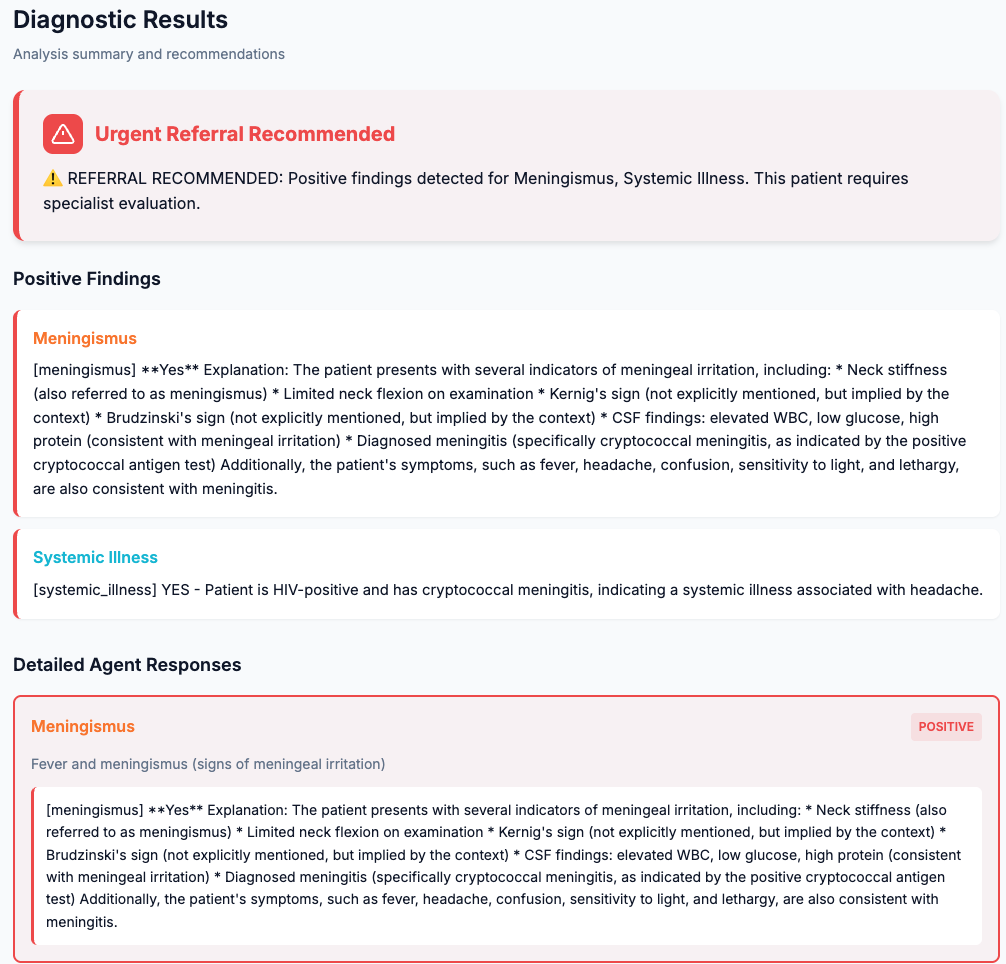
MERLIN
Overview
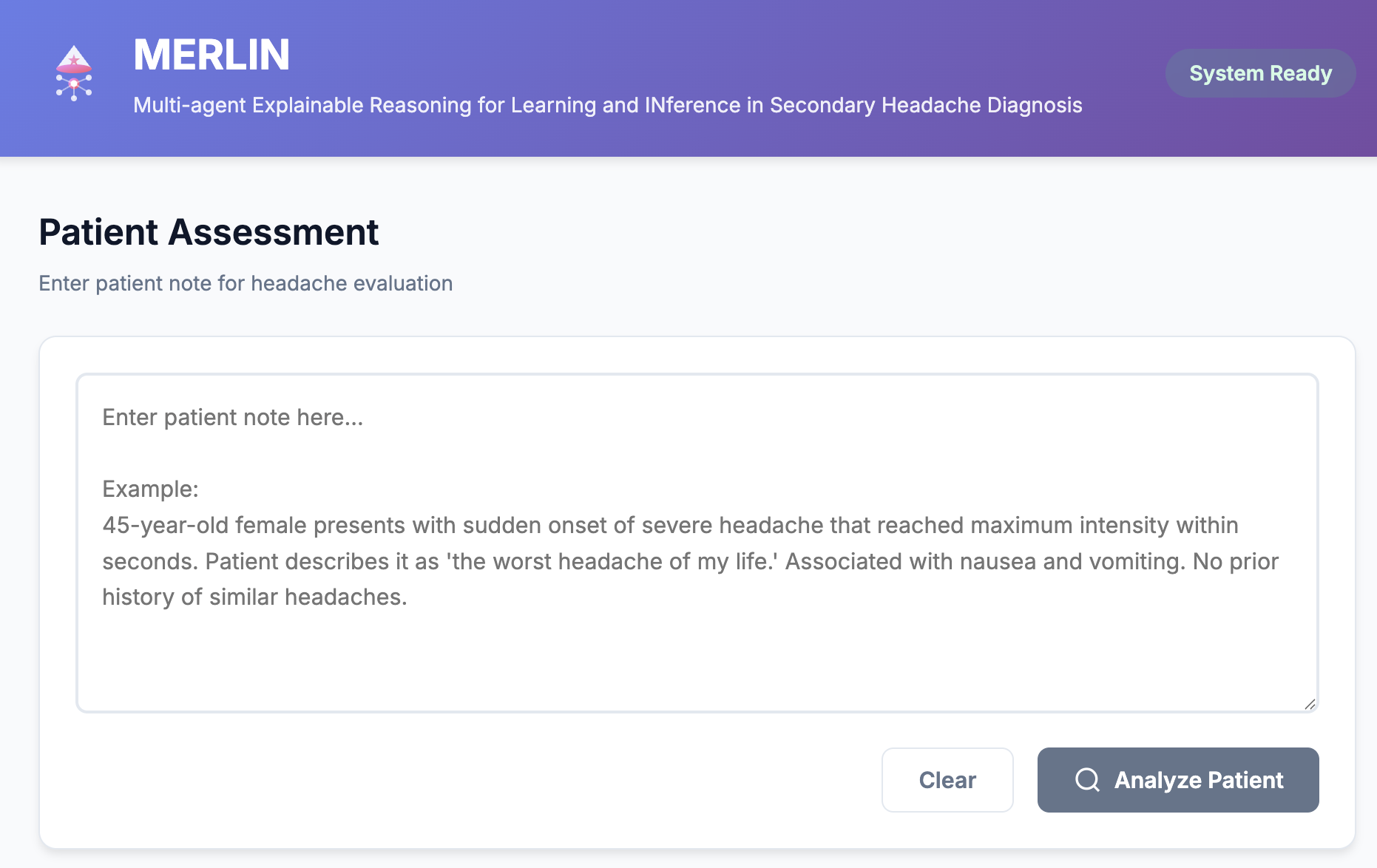
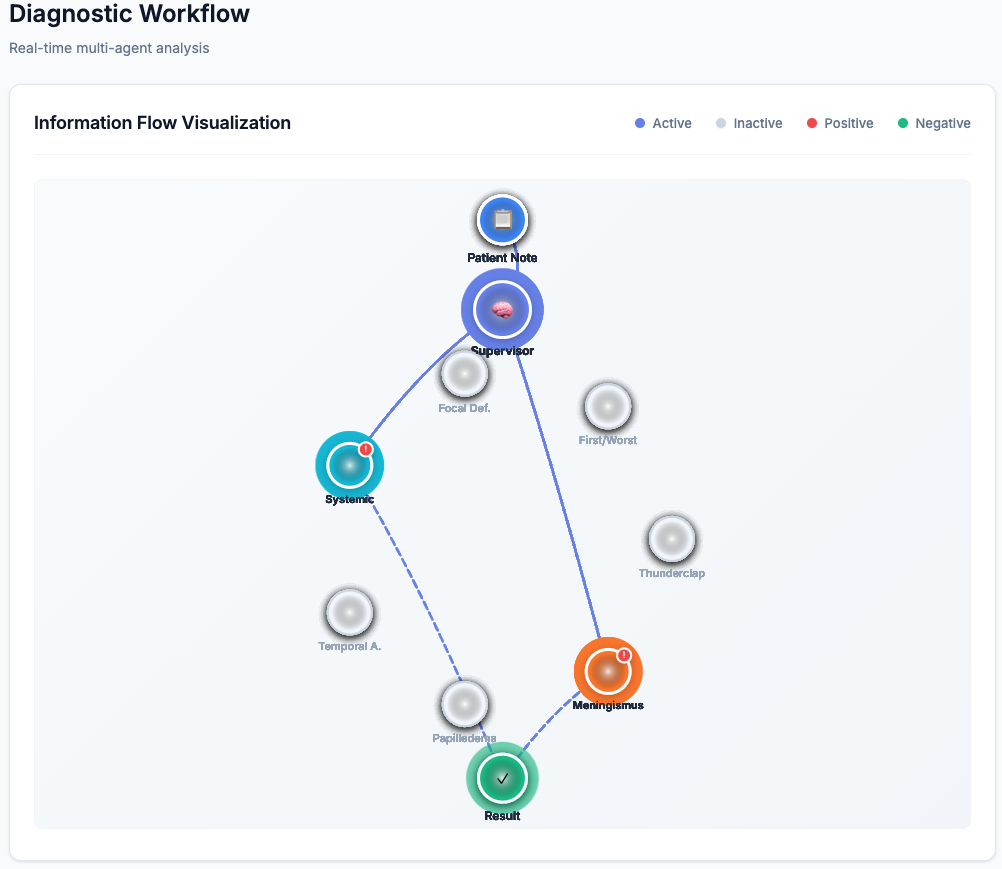
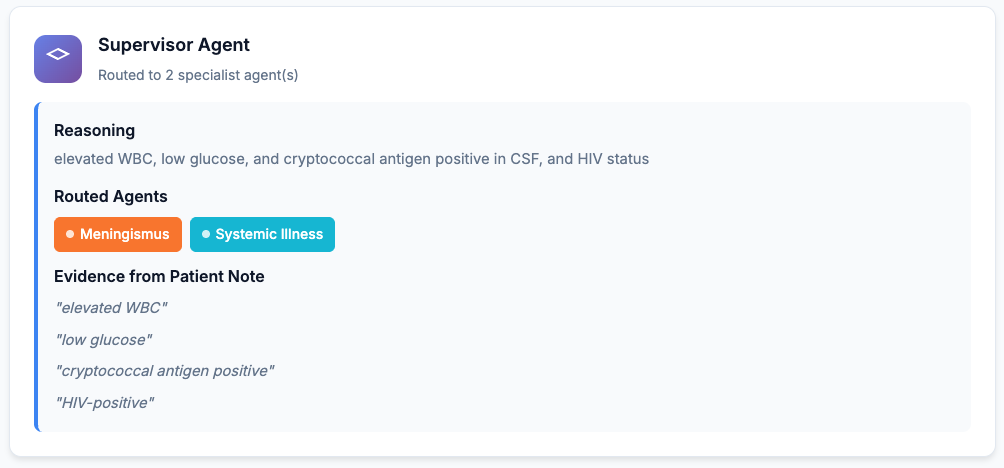
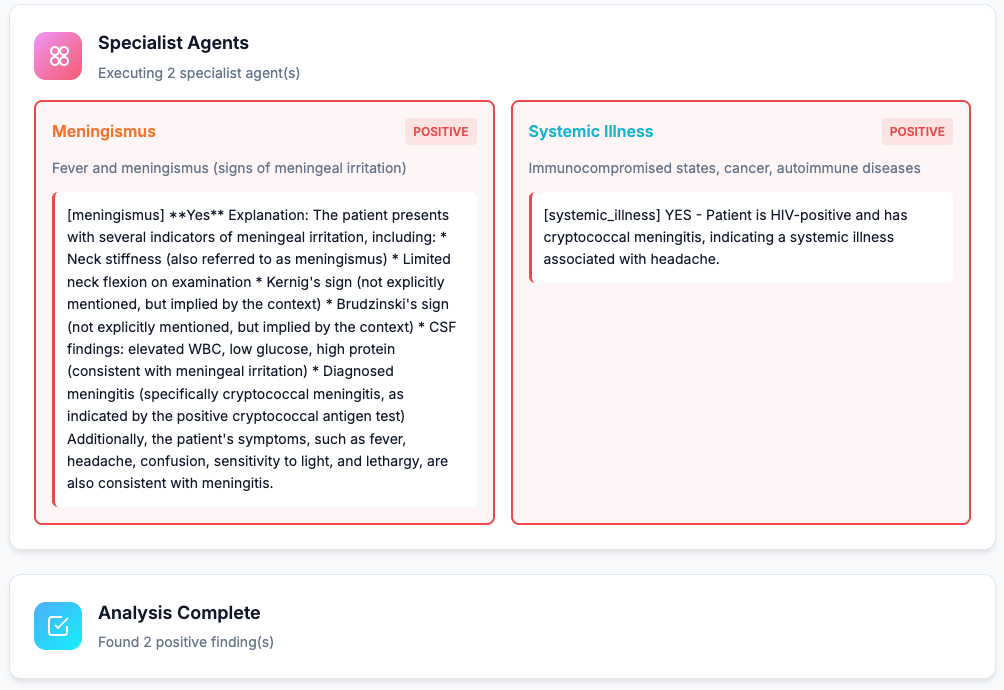
MERLIN is a generative AI clinical decision support system that uses a multi-agent architecture to identify dangerous secondary headache warning for primary care physicians. Built with LangGraph and powered by local LLMs, MERLIN provides transparent, explainable diagnostic assistance for urgent headache referrals.
Screenshots
QUEST
Overview
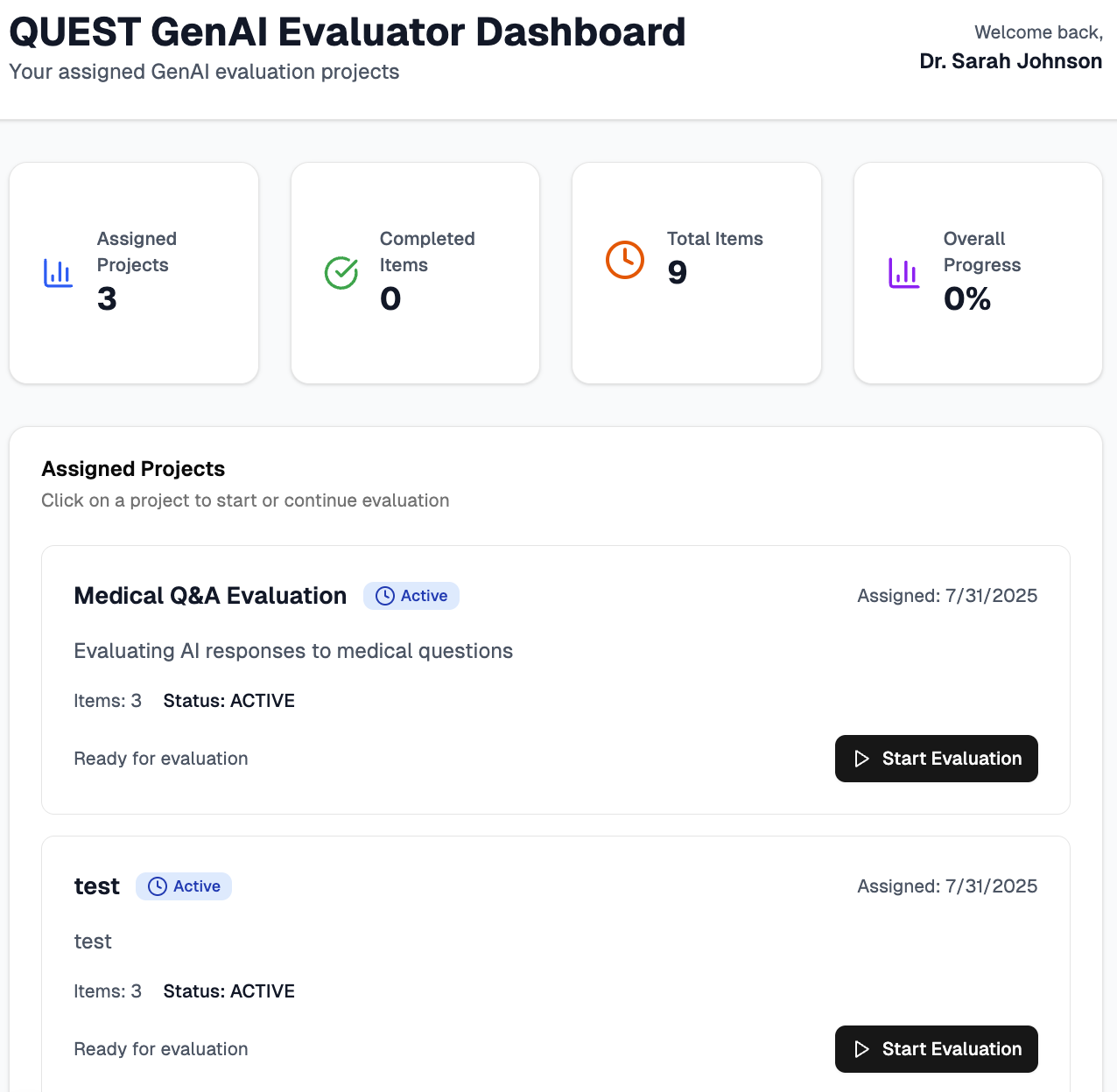
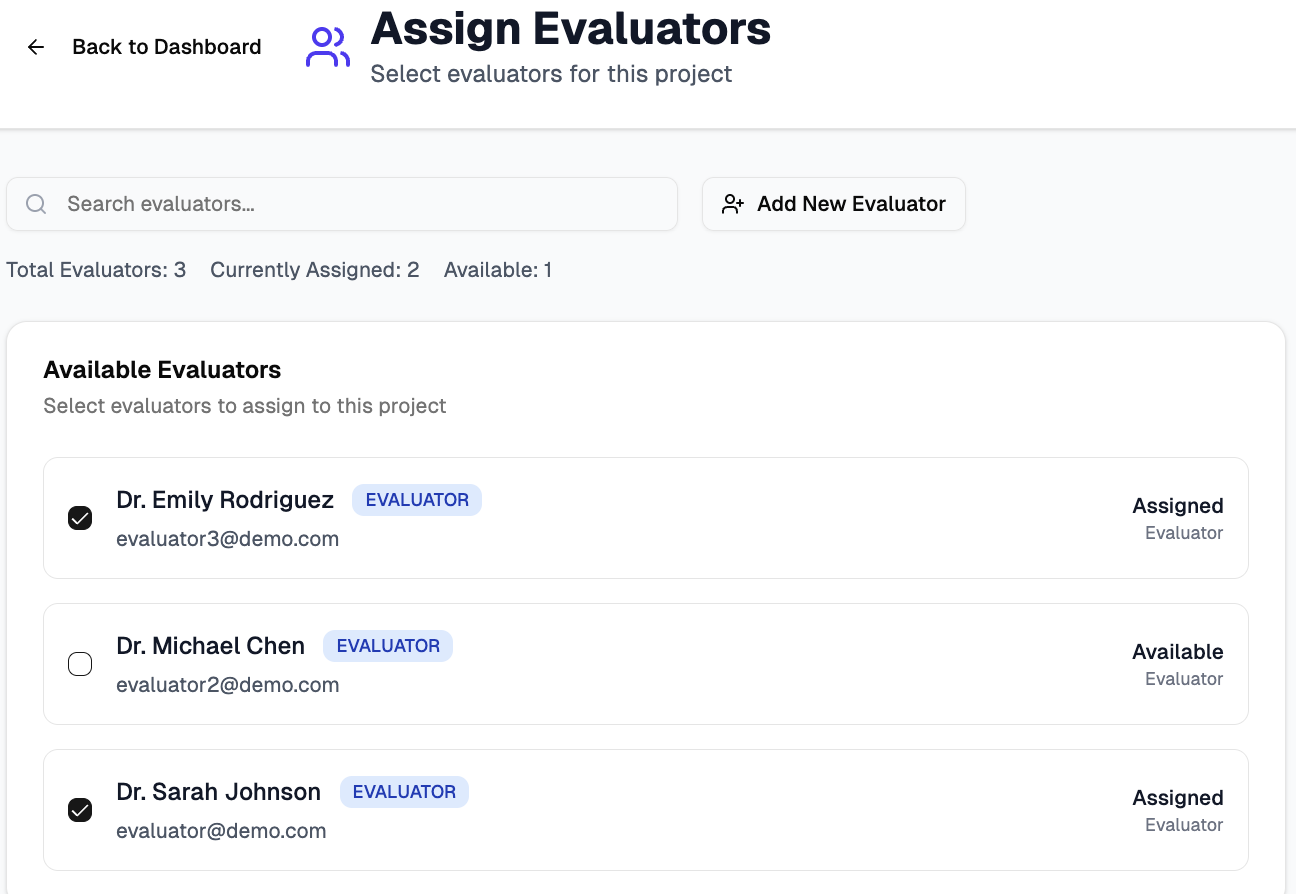
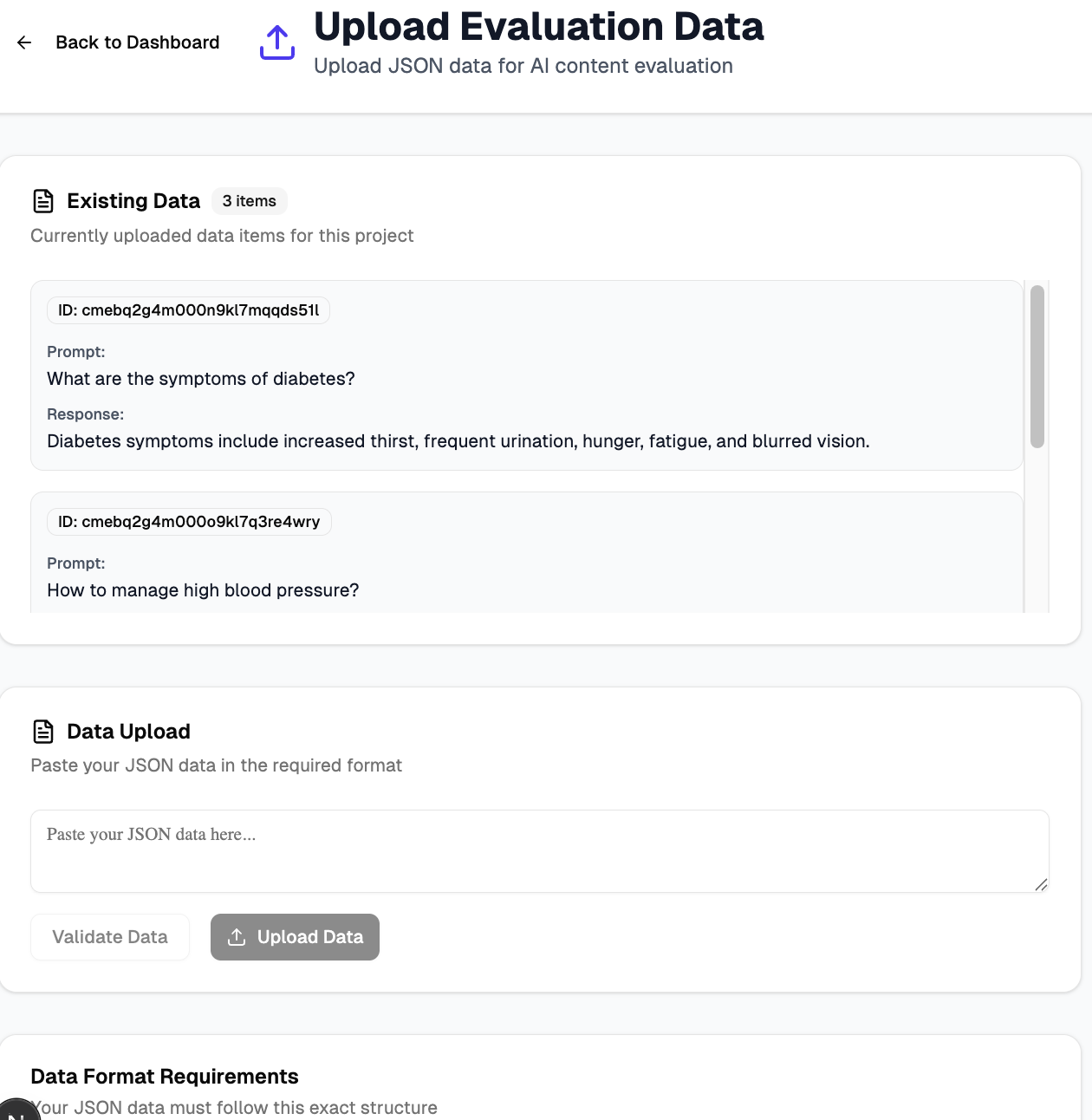
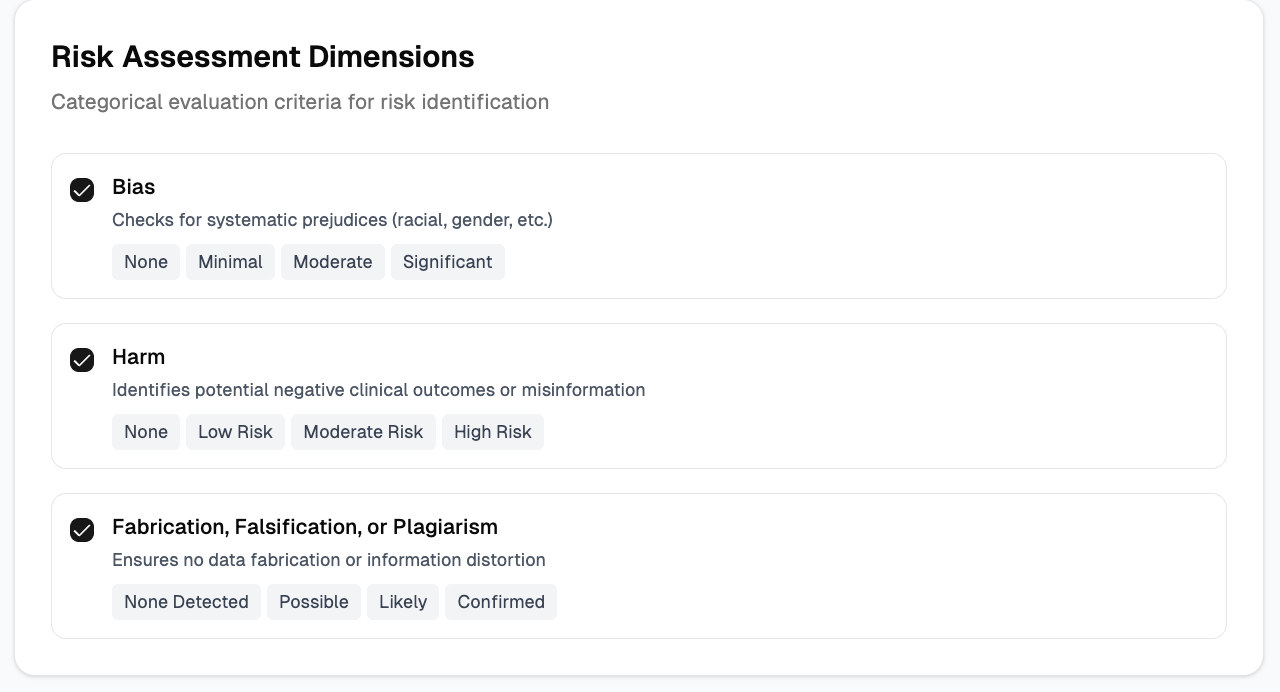
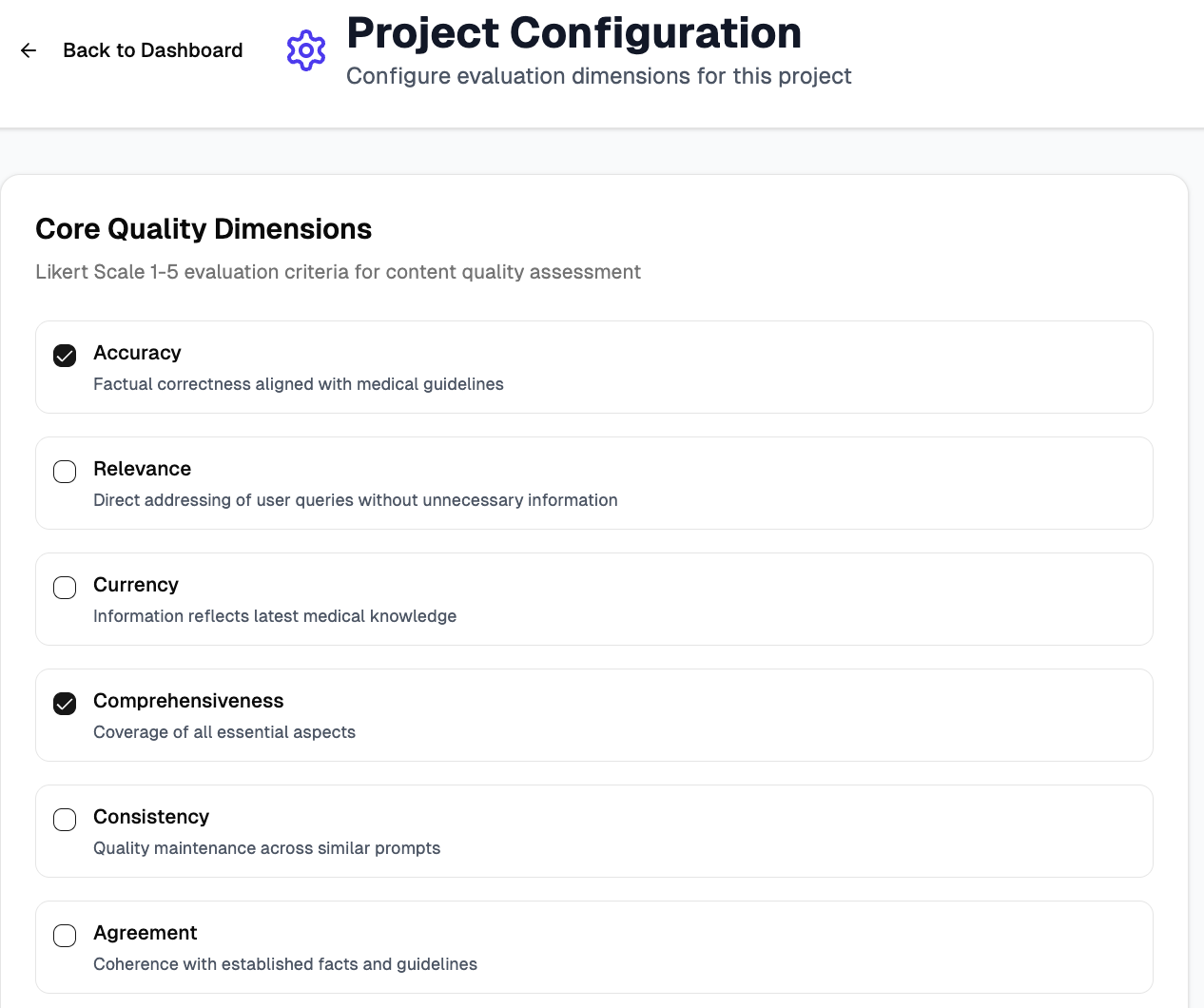
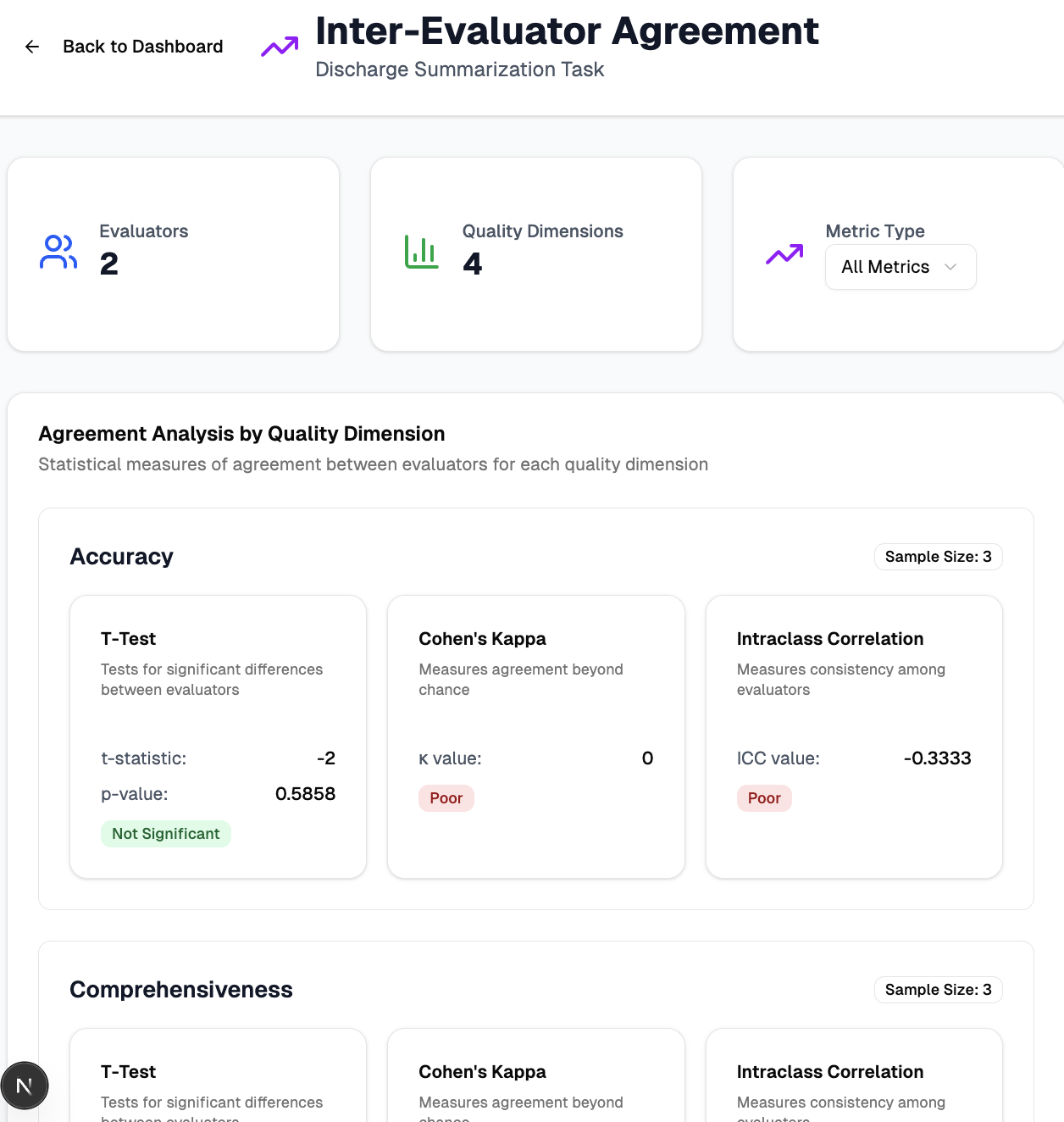
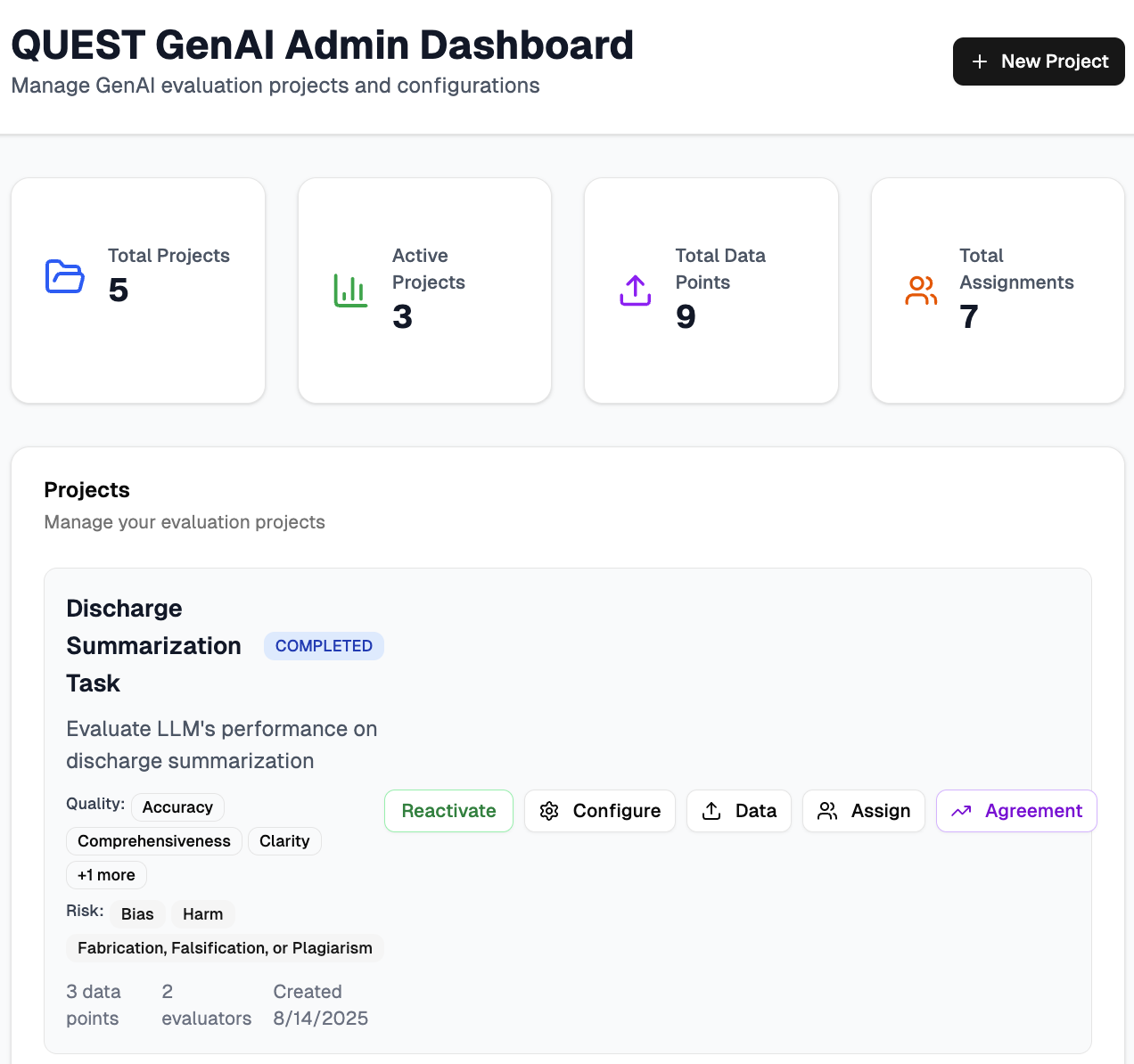
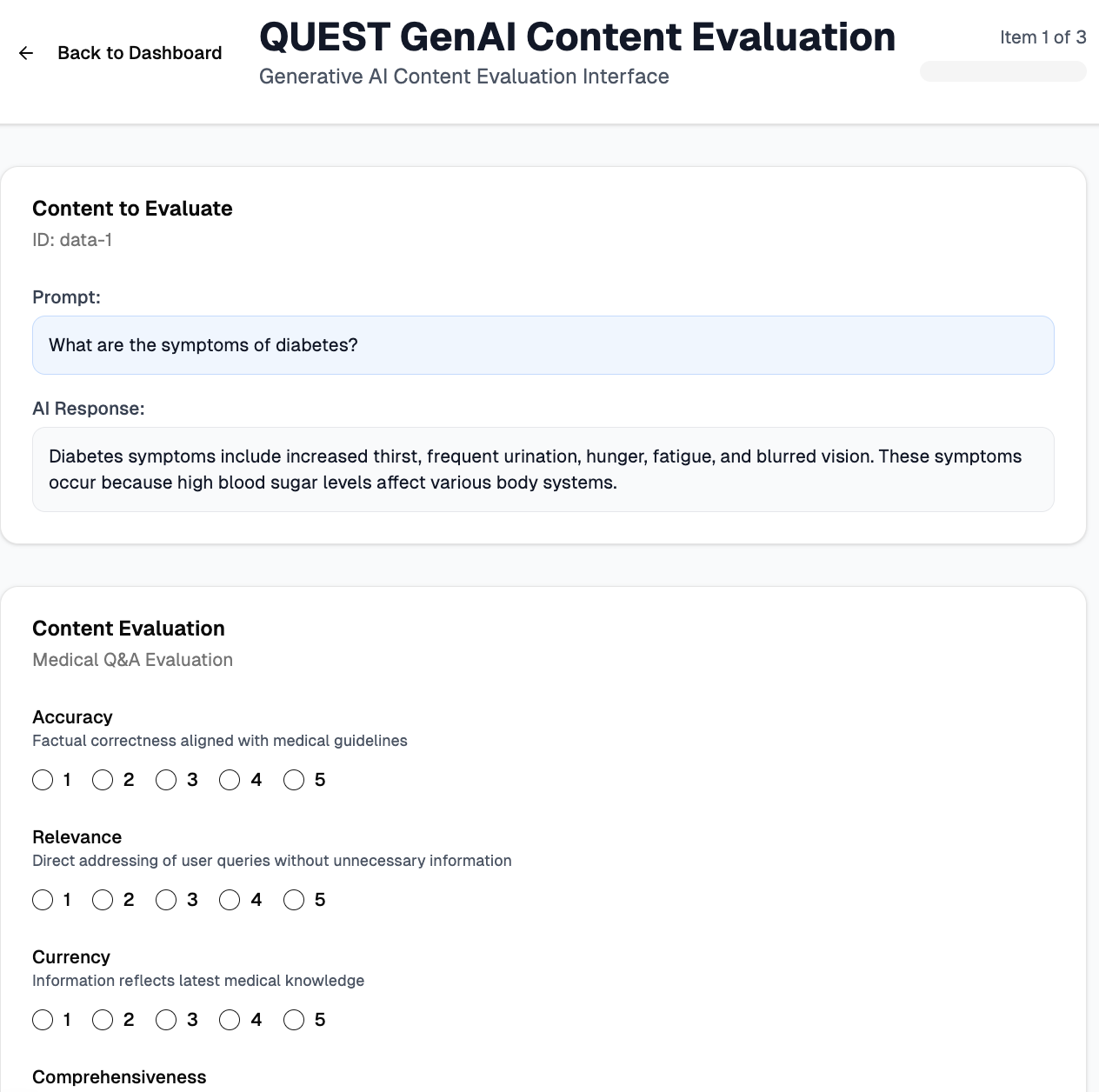
QUEST is a software tool designed to facilitate the human evaluation of large language models (LLMs) in healthcare. As the integration of generative AI into healthcare advances, it is crucial to ensure the safety and efficacy of these models through rigorous human assessments. QUEST provides a comprehensive evaluation framework organized into three main phases: Planning, Implementation and Adjudication, and Scoring and Review. This tool supports the evaluation process by guiding users through goal setting, task identification, stakeholder consideration, and success criteria definition, ultimately enhancing the reliability and effectiveness of LLMs in healthcare.
Screenshots
SmartBack
Overview
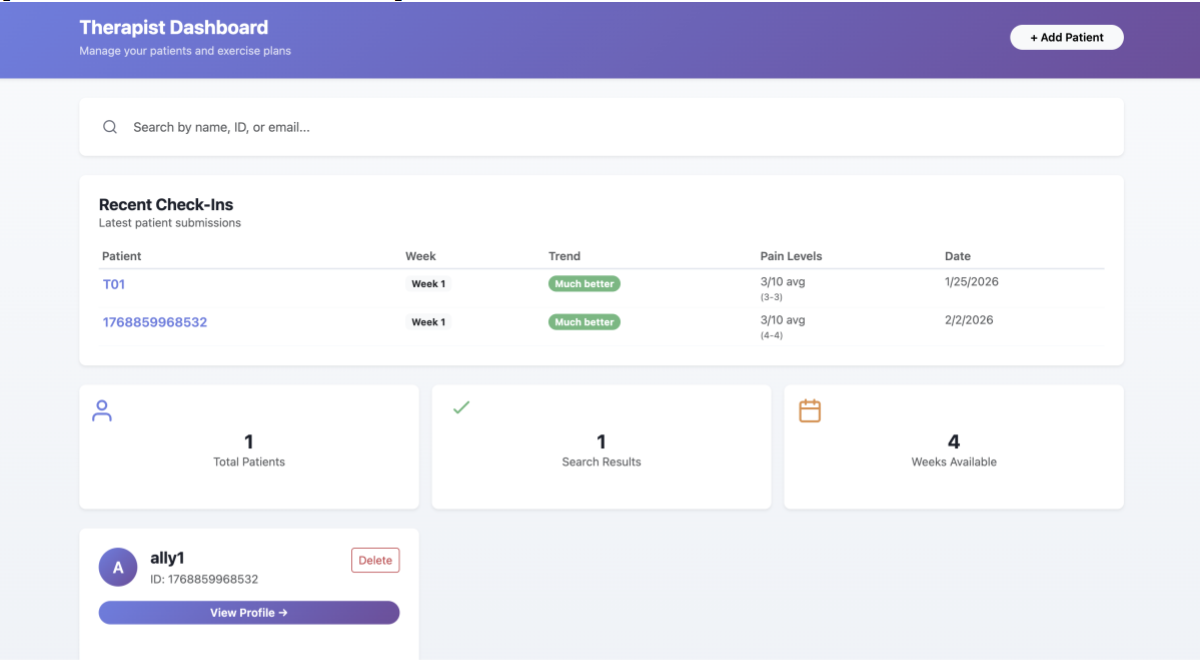
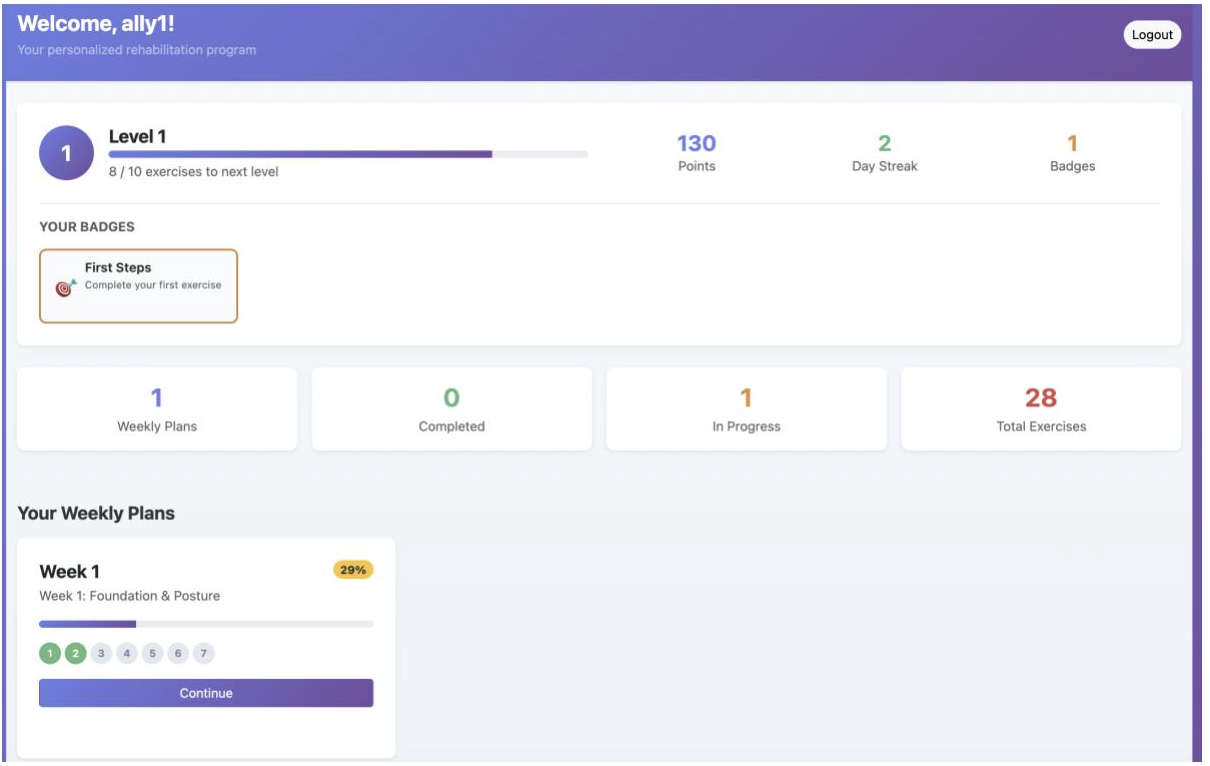
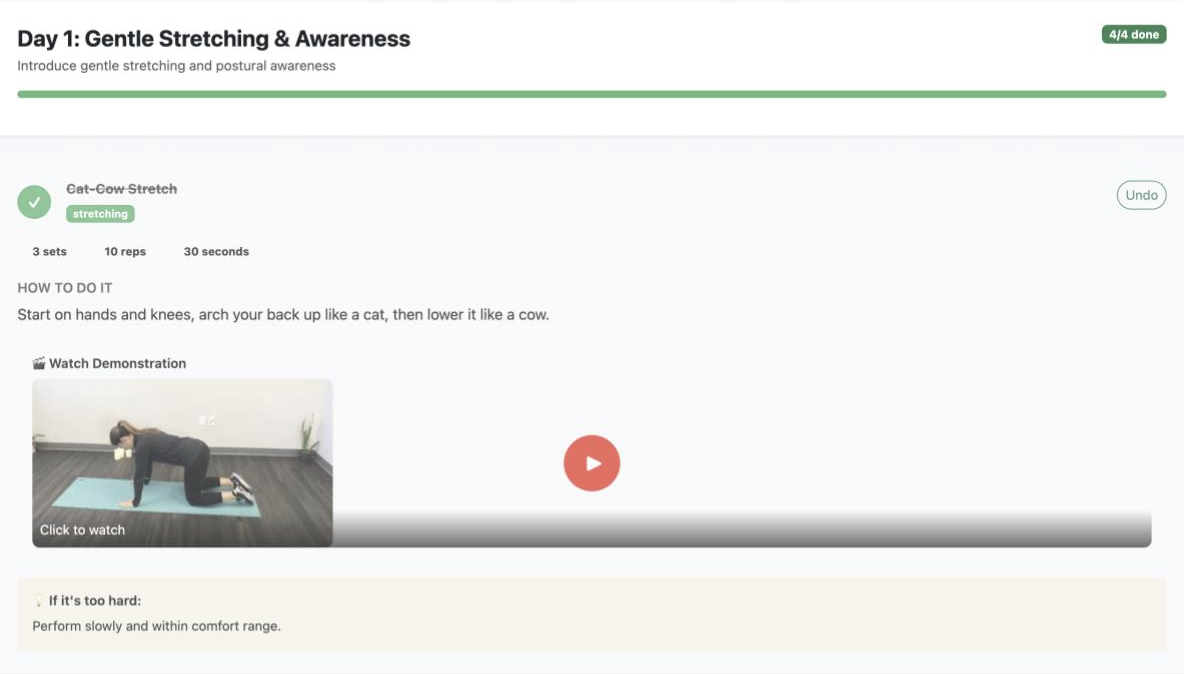
SmartBack is an intelligent web application that generates personalized exercise programs for individuals with low back pain. Built using advanced AI and Retrieval-Augmented Generation to provide tailored 7-day exercise plans that automatically adapt to patient progress. Features gamification mechanics including badges, levels, and streak tracking to promote long-term adherence, plus automated coordinator alerts for patients reporting worsening symptoms.
Screenshots
AIDA
Overview
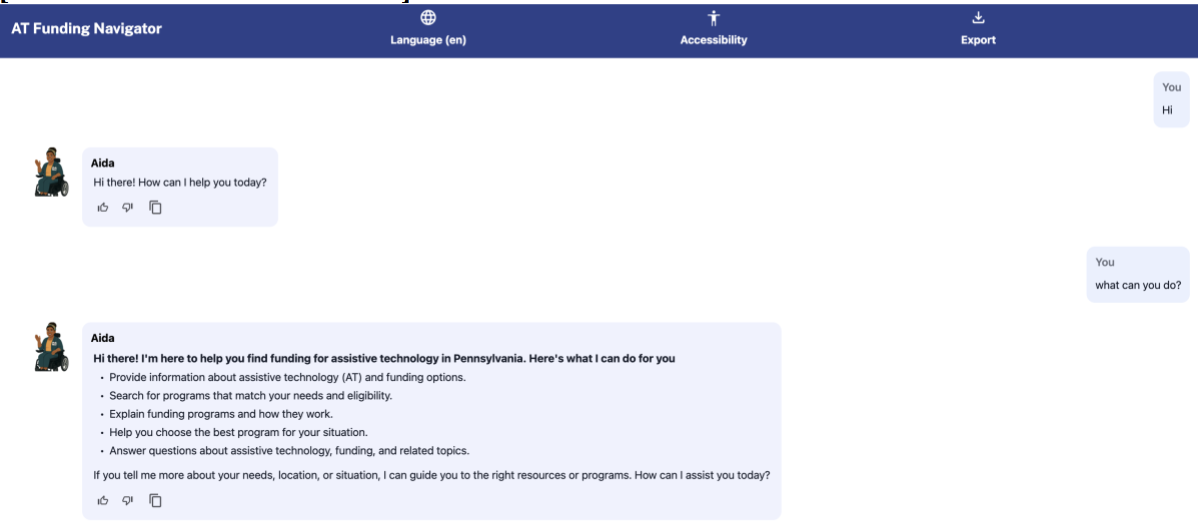
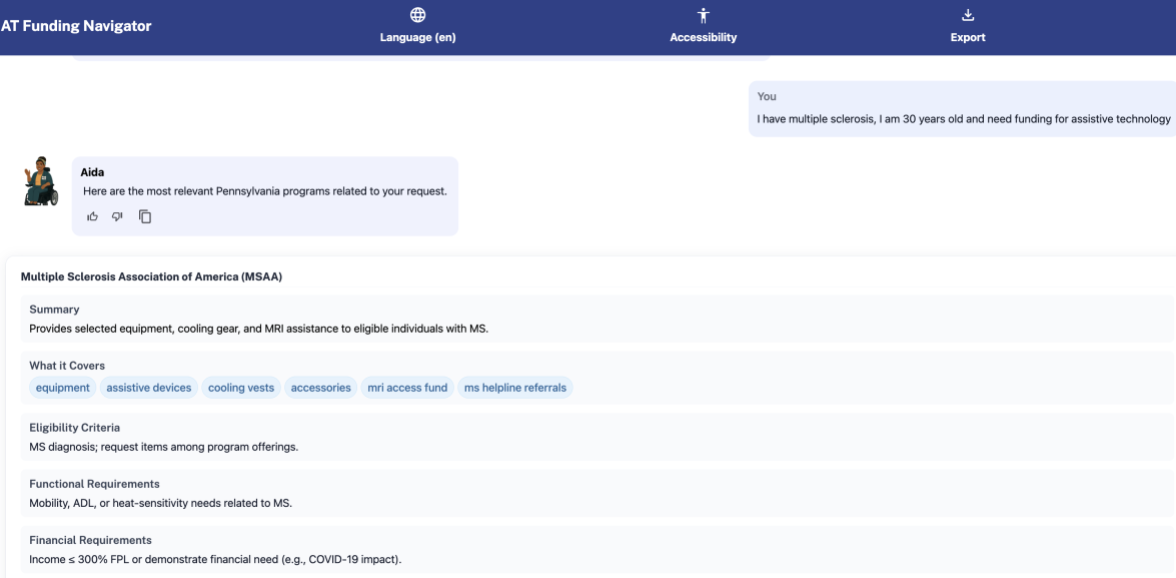
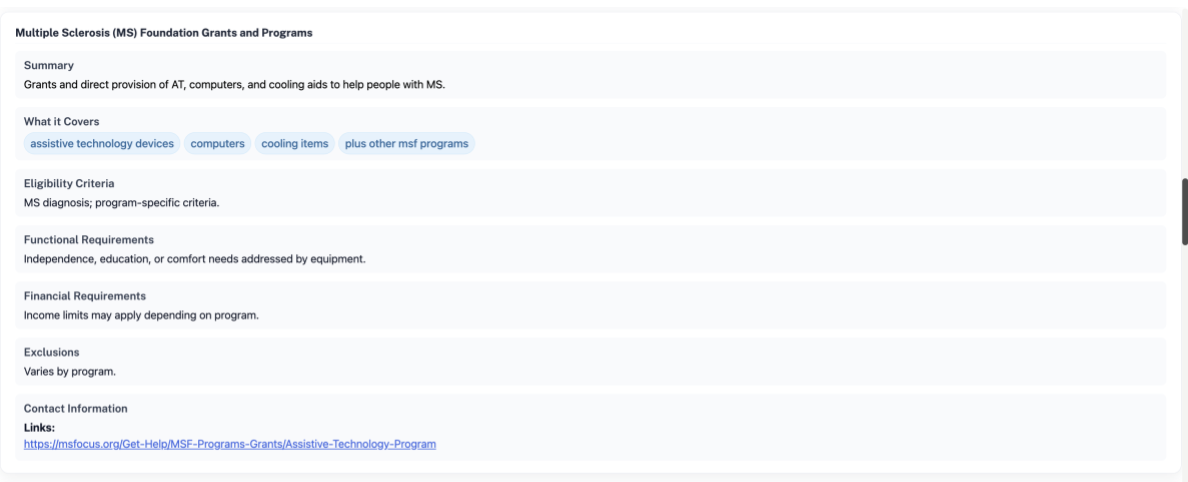
AIDA is an intelligent chatbot that helps individuals find and access assistive technology funding programs in Pennsylvania. The platform uses Retrieval-Augmented Generation to provide personalized program recommendations based on user needs, location, diagnosis, and insurance coverage. Users can interact via text or voice input in English or Spanish.
Screenshots
AnatomyAssistant
Overview
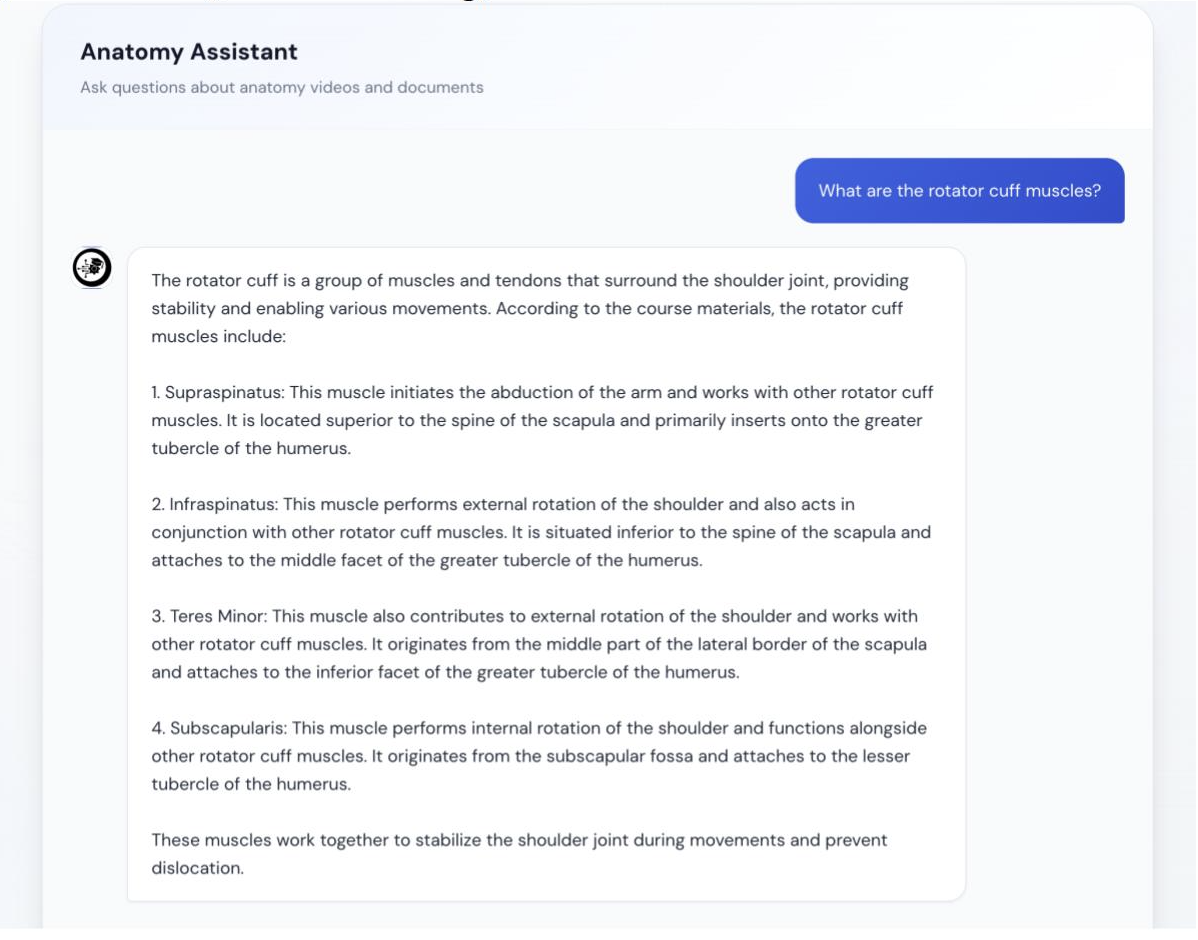
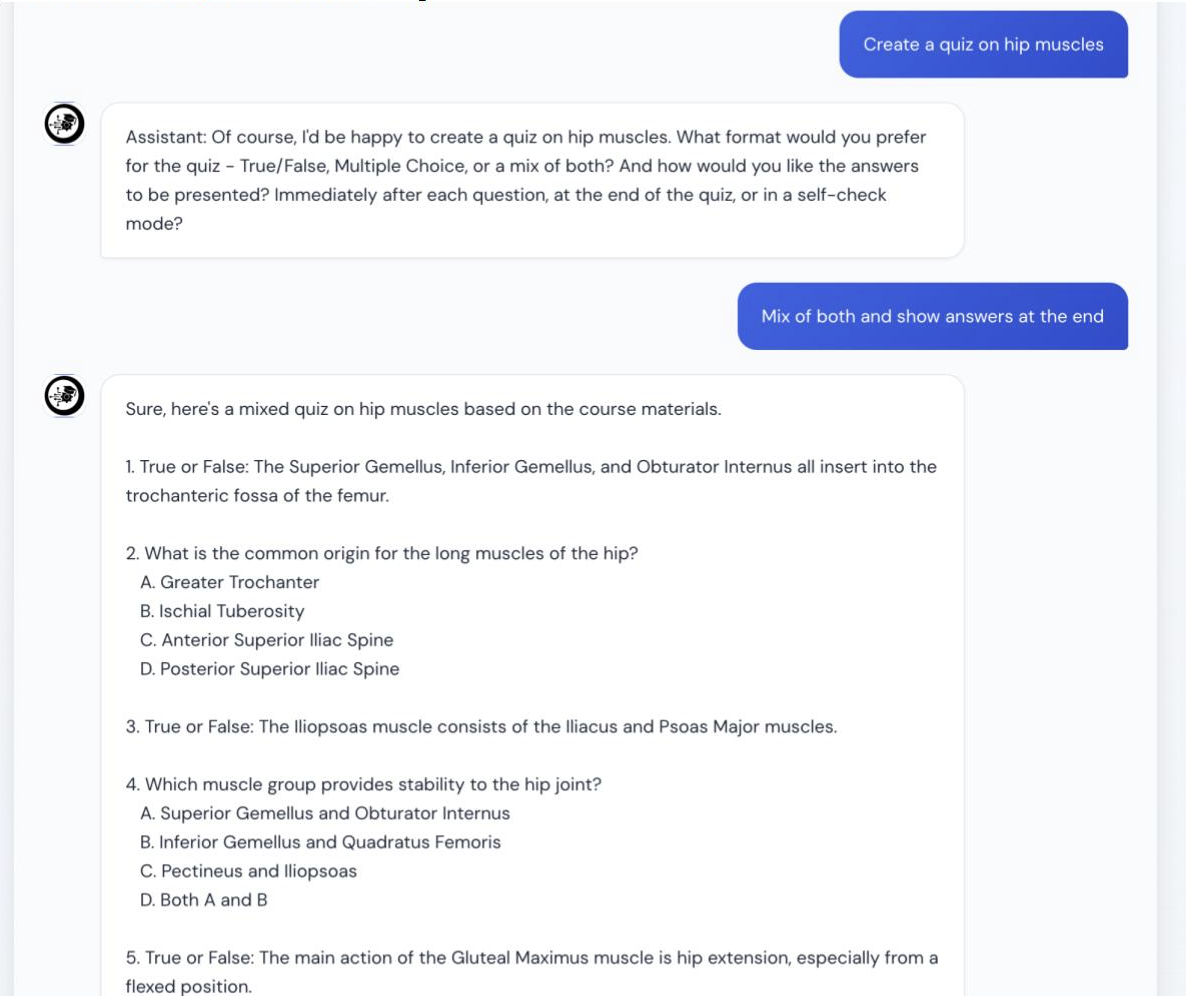
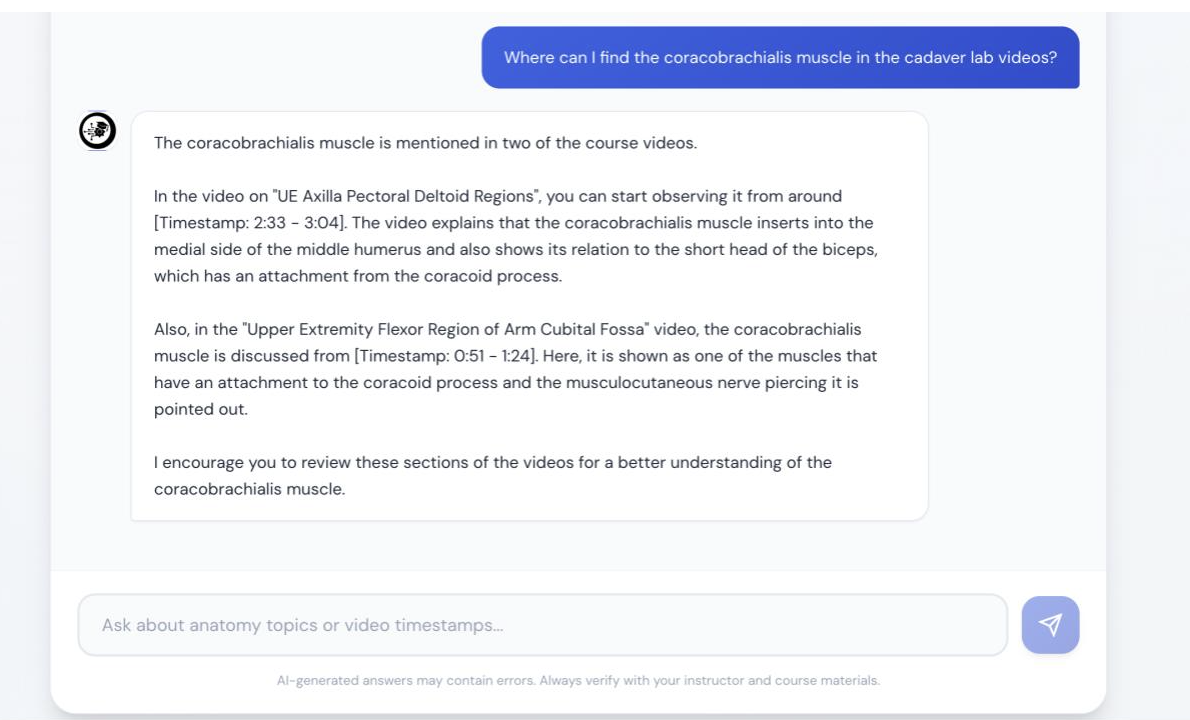
AnatomyAssistant is an intelligent AI-powered chatbot designed to enhance the learning experience for anatomy students. The application leverages advanced AI and Retrieval-Augmented Generation (RAG) to provide accurate, course-specific support by answering complex anatomical questions, generating customized quizzes to test knowledge retention, and precisely locating relevant content within video lectures with timestamp navigation. The system integrates with course materials to deliver contextually relevant responses, helping students master difficult concepts and prepare for examinations more effectively.
Screenshots
StudentFeedback
Overview
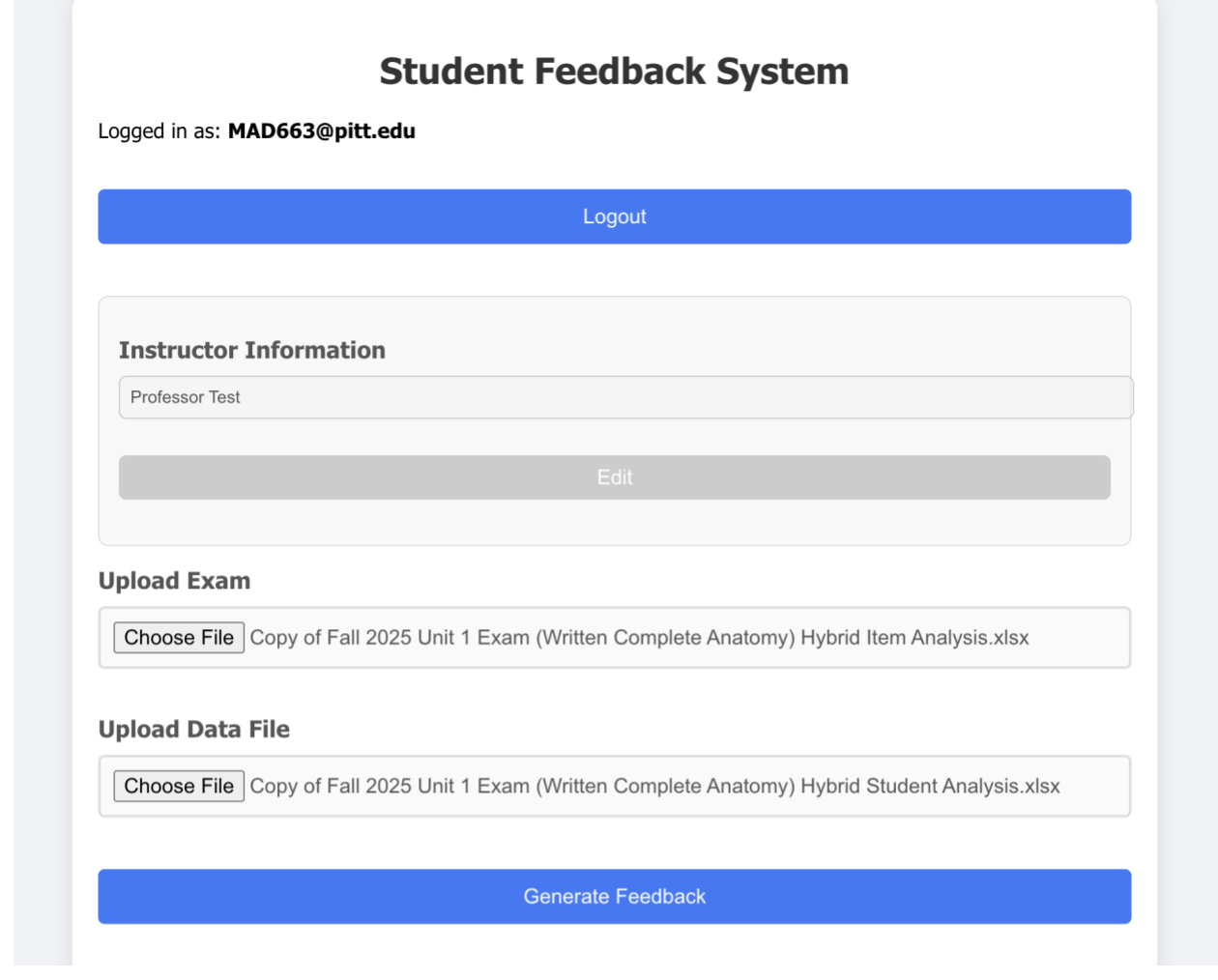
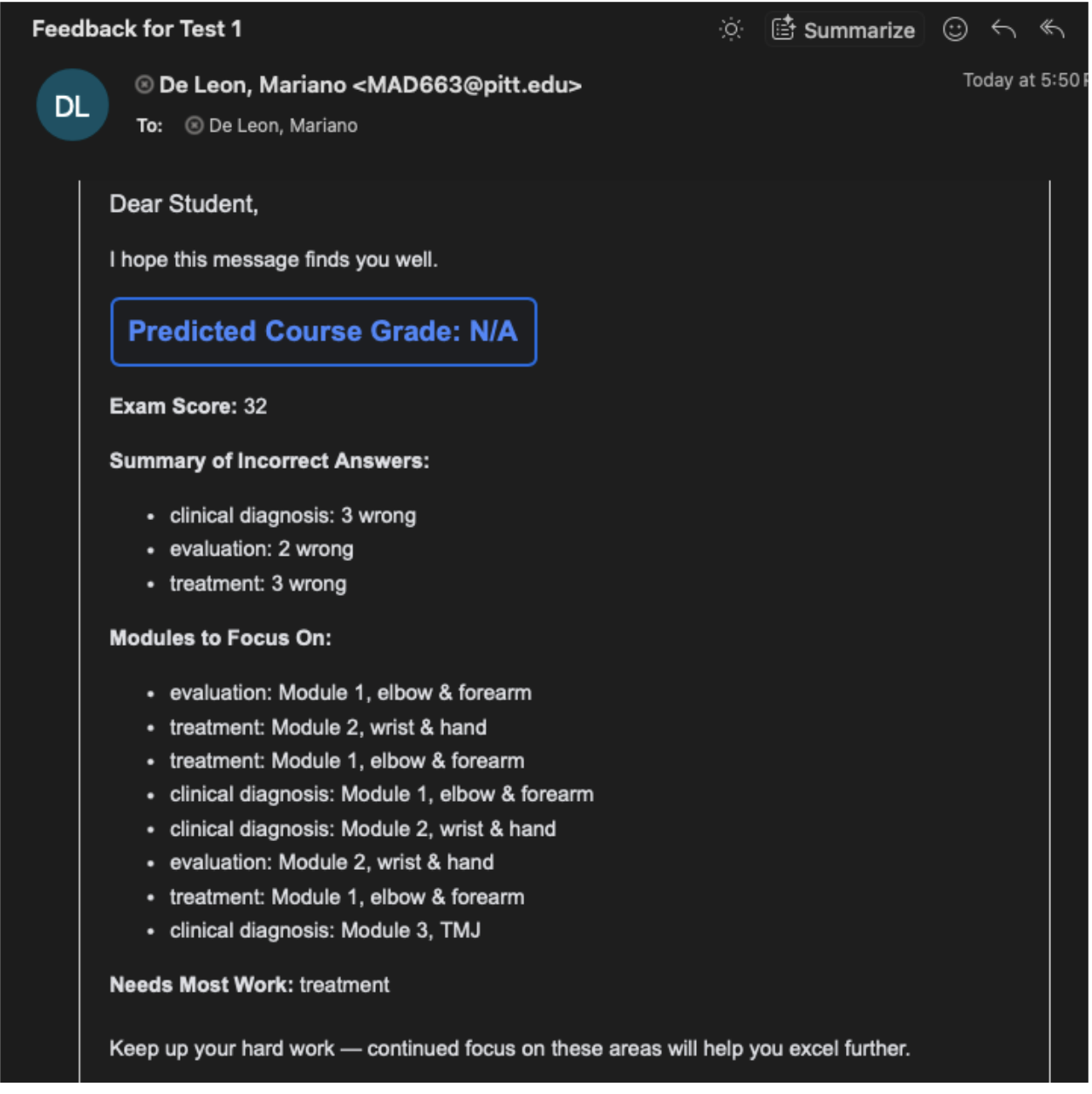
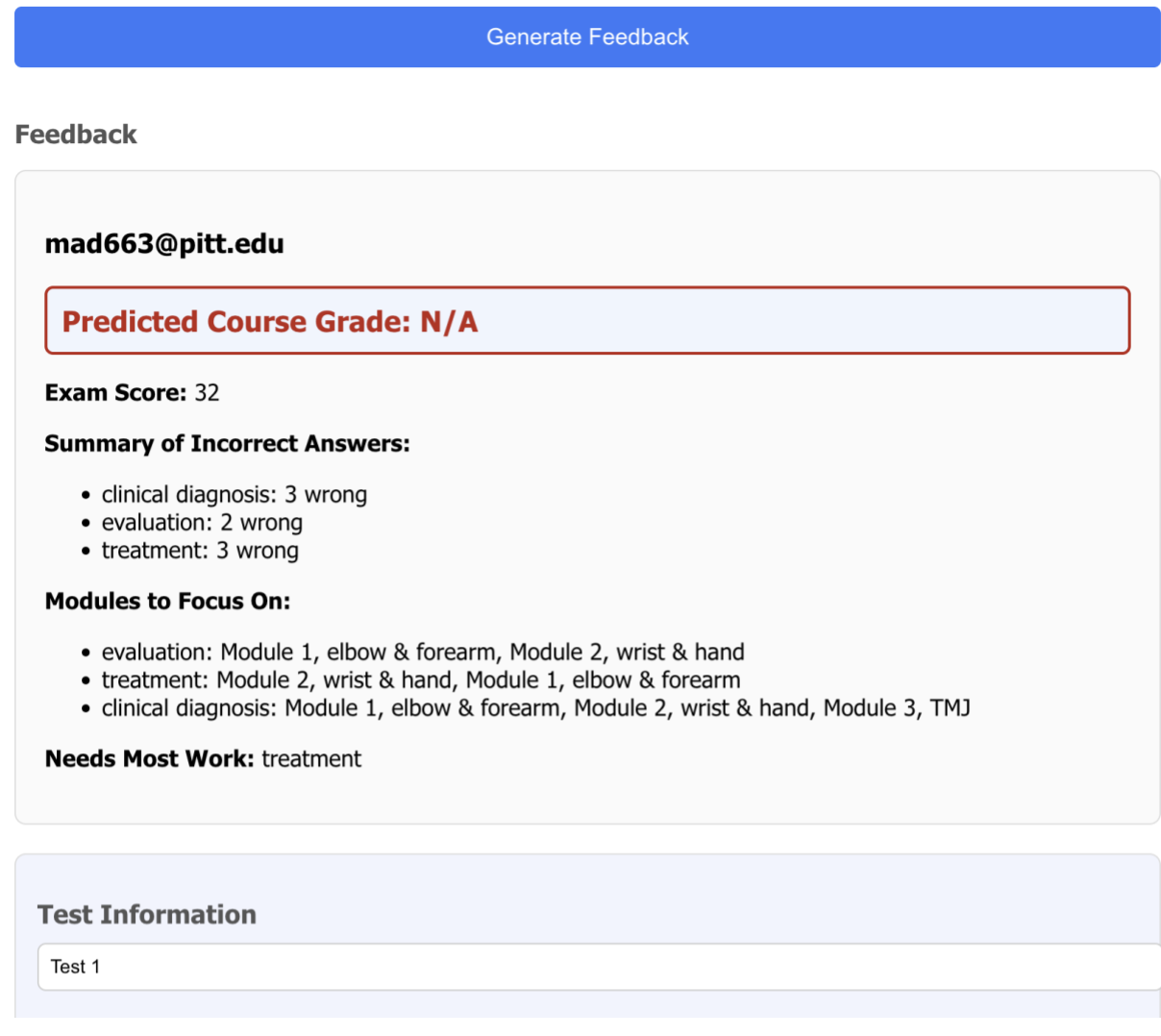
StudentFeedback is a comprehensive web-based application designed for managing and analyzing student feedback with AI-powered insights. The platform features secure Microsoft OAuth authentication, interactive data visualization dashboards, and automated feedback processing pipelines to support educational assessment and continuous improvement. Instructors can efficiently collect, organize, and analyze student responses while the AI system automatically identifies key themes, sentiment patterns, and actionable insights to enhance teaching effectiveness and student outcomes.
Screenshots